Posted on

Sneak Peek at the newest Poetry Prize Covers

screen capture

Here is a sneak peak at the front covers for the 2025 Arthur Smith Poetry Prize first prize winner and runner up. They’ll be coming out in spring 2027, and as always, our judges did an amazing job selecting the winners!

The cover for A HEART THAT STRETCHES THE LENGTH OF THE BODY: POEMS by David B. Prather. a collection of colorful insects on a pale blue background with darker blue text.
2025 Arthur Smith Poetry Prize winner, A Heart that Stretches the Length of the Body, by David B. Prather.
A black cat stares at a screen door on a rustic porch. White text on the screen door says MY OUT-MIGRATIONS: POEMS by Elaine Fowler Palencia
My Out-Migrations: Poems by Elaine Fowler Palencia is the first runner up in the 2025 Arthur Smith Poetry Prize competition.

Follow the link below if you want a refresher about the history of the Arthur Smith Poetry Prize. All the past winners and judges are listed there.

Posted on

Bookselling today: Did the author get paid?

woman reading book, presumably in a bookstore. She wears a gray sweater, jeans, and short black boots. Her hair is pulled back in a ponytail

You support authors you like. You buy their books, therefore you support them, right? Yes, but… Where and how you buy a book can matter as much to the author’s bottom line as whether you bought it at all. Sadly, the publishing industry operates on a set of archaic rules so lopsided that even if a book becomes a bestseller, its author may still lose money.

woman reading book, presumably in a bookstore. She wears a gray sweater, jeans, and short black boots. Her hair is pulled back in a ponytail
Photo by Pixabay on Pexels.com

The hidden, ugly thing about bookselling

When a bookstore orders copies of a book, it isn’t the straightforward sale it appears to be. The book retail industry has historically operated more like a consignment arrangement. A retailer, whether it’s a Barnes & Noble, an independent shop, or a big-box store like Target, orders books from a distributor, stocks them on shelves, and then, if the books don’t sell within a relatively brief period of time, two or three months, sends them right back for a full refund.

This practice of “returnable” inventory was baked into the bookselling industry during the Great Depression as a way to encourage retail booksellers to take risks on unknown authors. The logic was reasonable: if a bookstore could return what it didn’t sell, it would be more willing to stock titles with uncertain commercial appeal. In theory, this should have opened doors for authors, but in practice, it created chaos.

Publishers, anticipating demand that may never arrive, routinely overprint. Bookstores, fearing they’ll miss a hit, overbuy. And when the books don’t move, they get shipped back. For titles by debut or small-press authors, the number of returns can be staggering. In trade publishing’s big-box retail model (think Costco, Walmart, and Target) return rates of 30 to 40 percent are not unusual. Those numbers are crippling for a small press and its authors.

When a “sale” isn’t really a sale

Here’s where it gets particularly painful for authors.

When a retailer orders a book, the money flows, briefly, in the right direction. The retailer buys at a wholesale discount (typically 55% off the cover price) from a distributor. The distributor passes royalties to the publisher, who pays the author their contracted percentage. So far, so good.

But that initial transaction is what the industry calls a “soft sale.” If the book comes back, those royalties come back too as a negative line item on the author’s royalty statement. The author has already been paid; now they owe it back. Distributors also charge a per-unit restocking fee on returned copies, meaning publishers, and by extension, authors lose money coming and going.

This system evolved for reasons that once made sense. But it has calcified into something that harms the very people doing the creative work, and there’s been no regulation to address it.

The big-box and algorithm problem

The returns crisis is inseparable from the broader shift in who sells books and how they sell them.

When trade publishing orients itself toward high-volume retailers with massive floor space and razor-thin margins, the inevitable result is aggressive ordering followed by aggressive returns. A celebrity biography ordered in bulk by a big-box chain can come flooding back the moment public sentiment turns, and books tied to news cycles or seasonal trends vanish from shelves before they find their readers.

Meanwhile, Amazon makes 60% of all book sales today, and that gives it unreasonable leverage over publishers’ terms, discounts, and visibility. For readers, the algorithm feels helpful, with recommendations, one-click purchasing, and overnight delivery. For authors and small publishers, however, the reality is more complicated. Royalty structures vary dramatically depending on the platform, the price point, and whether the author goes through a publisher or self-publishes.

The point is that authors—especially debut, independent, and small-press authors—are the least protected participants in a system that treats books like produce: stock the shelves, and if it doesn’t move, send it back.

What you, the reader, can actually do:

Here’s the good news: readers have more power than they know. Every deliberate purchasing decision is a small vote for the kind of publishing world we all want to exist. Here are a few suggestions to help you to help the author (and the small press) the next time you buy a book:

  • Buy directly from the author or publisher when possible. A direct sale from an author’s or publisher’s website typically puts 20 to 30 percent more money in that author’s pocket than a sale through a major retailer. Purchasing direct cuts out multiple middlemen and ensures that more money goes to the creators of the book.
  • Request books at your local independent bookstore. Even if the store doesn’t stock a title, walking in and asking for it creates a demand. Readers asking for a book are more persuasive to a bookseller than an author asking for shelf space, and getting a book onto physical shelves opens the door to discovery that no algorithm can fully replicate.
  • Leave reviews. On Amazon, on Goodreads, on your own social feeds. Reviews improve an author’s algorithmic visibility and they also help the next reader make the decision about buying that book. For independent and small-press authors, a handful of genuine reviews can really shift how a title performs.
  • Recommend books vocally. Word of mouth is still the most powerful sales engine in any field. A personal recommendation, whether by text message, a post on social media, or a mention at book club can drive sales in ways no marketing budget can replicate.
  • Borrow from the library, and then tell the library what you loved about the book. Library checkouts of physical books or digital books also generate royalties, and library purchase requests help small-press titles reach institutional collections. Librarians listen. (And come on! You’re supporting libraries at the same time… We need libraries!)
  • Support literary culture broadly. Subscribe to literary magazines. Attend author readings. Follow small presses on social media. The infrastructure that produces good books depends on an ecosystem of support that goes beyond individual transactions.

The bottom line

Publishing is a business built on optimism. Every book represents a bet by the author, the press, and the bookseller that someone will care about that book. Readers are crucial to those bets paying off.

So, buy the book directly from the author or publisher if you can. Bookshop.org is a good alternative if you would rather shop on line. Then tell someone about the book. Ask your local bookstore and library to carry it. Leave a review. The authors you love are counting on more than your enthusiasm; they’re counting on you to help keep the lights on.


Madville Publishing is an independent literary press committed to supporting authors and building a more equitable publishing ecosystem. Browse our catalog and purchase directly at madvillepublishing.com.

Posted on

The 2026 Arthur Smith Poetry Prize is Closed for Submissions

Poet Kari Gunter-Seymour is a white-haired woman with glasses and a lovely warm smile. She's wearing a burgundy-colored sweater.

Our wonderful readers are in the thick of the reading for this year’s Art Smith Prize. They’re doing a fine job, and we plan to share favorites with our final judge Kari Gunter-Seymour soon! We will keep you posted.


Deadlines and Prizes

  • Accepting Submissions June 1 through September 1, 2026.
  • Winners will be announced in January 2027.
  • Winning poet receives: a $1,000 advance; a standard royalty contract; and 10 copies of the published book.
  • Finalists will also be considered for future publication.

Competition Guidelines

  • Simultaneous Submissions: Simultaneous submissions are acceptable. Please notify Madville Publishing immediately if your manuscript is accepted elsewhere.
  • Eligibility: We will be happy to receive work by any poet writing in English. Poems published in print or online periodicals, anthologies, or chapbooks may be included, but the manuscript itself must be unpublished. Original work only; translations are ineligible.
  • Format: Minimum of 48 pages. There is no maximum length, but we expect manuscripts not to be much more than 90 pages. Pages should be numbered with no more than one poem per page. Please include a title page with title only, a table of contents, and an acknowledgments page.
  • Multiple Submissions: Submission of more than one manuscript is acceptable, but each manuscript must be submitted separately and include a separate entry fee.
  • International Submissions: We accept international submissions.
  •  Revisions: The winner will have the opportunity to revise the manuscript before publication. No revisions will be considered during the reading period.
  • SUBMISSIONS SHOULD BE BLIND. PLEASE DO NOT INCLUDE AUTHOR NAME ANYWHERE ON THE MANUSCRIPT.
  • Entry Fee: $25
  • Deadline: September 1, 2026.
  • Winner will be announced January 2027.

submit

Our judge for 2026 is
Kari Gunter-Seymour!

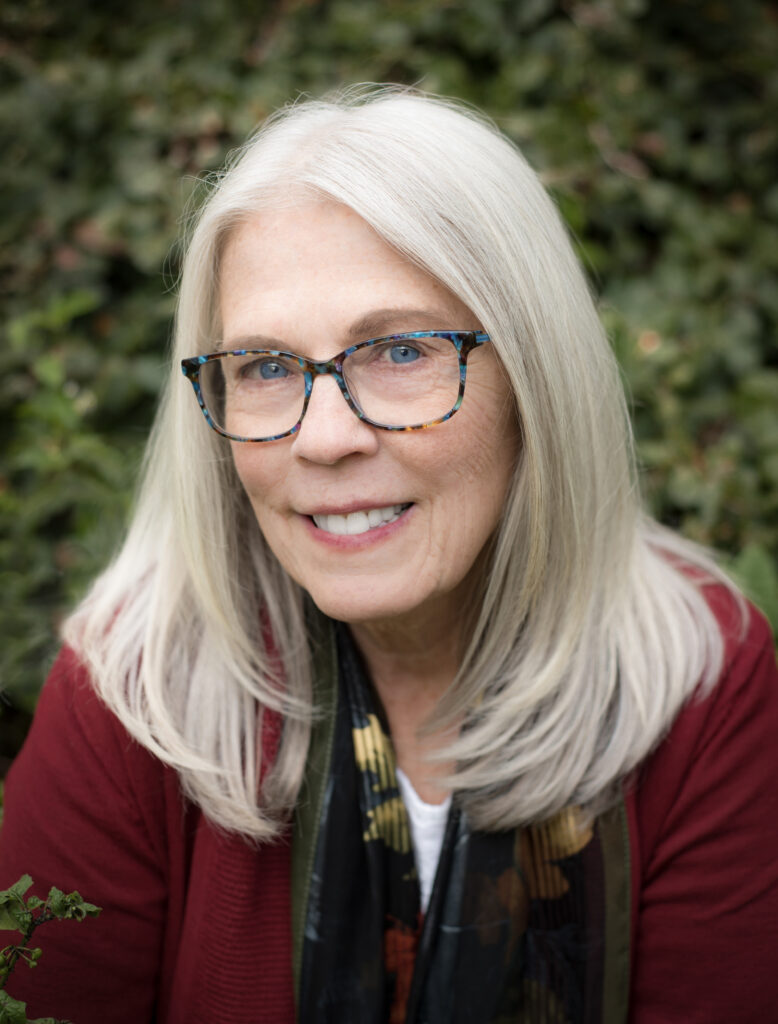
Poet Kari Gunter-Seymour is a white-haired woman with glasses and a lovely warm smile. She's wearing a burgundy-colored sweater.

Kari Gunter-Seymour is the immediate past Poet Laureate of Ohio and an Academy of American Poets Laureate Fellowship recipient. Her poetry collections include Dirt Songs (EastOver Press, 2024) winner of the 2025 Bronze IPPY Award for Poetry, 2025 NYC Big Book Award, 2025 Feathered Quill Award, 2025 National Federation of Press Women Award, 2024 POTY Author of the Year Award and STORYTRADE Award; Alone in the House of My Heart (Ohio University Swallow Press, 2022), winner of the 2024 Legacy Award, the 2023 Best Book Award, and finalist for the 2023 National Indie Excellence Award; and A Place So Deep Inside America It Can’t Be Seen(Sheila Na Gig Editions, 2020), winner of the 2020 Ohio Poet of the Year Award. A ninth generation Appalachian, she is the executive director of the Women of Appalachia Project and editor of its anthology series, Women Speak. Gunter-Seymour holds writing workshops for incarcerated adults and women in recovery, is a retired instructor in the E.W. Scripps School of Journalism at Ohio University and the founder, curator, and host of “Spoken & Heard,” a seasonal performance series featuring poets, writers, and musicians from across the country. She is the editor of I Thought I Heard A Cardinal Sing: Ohio’s Appalachian Voices, funded through the Academy of American Poets and the Andrew W. Mellon Foundation. She was selected to serve as a 2022 Dodge Poetry Festival Poet and is a Pillars of Prosperity Fellow for the Foundation for Appalachian Ohio. Her work has been featured in World Literature Today, American Book Review, Poem-a-Day, Katie Curic’s Wake Up Call and The New York Times.


Preliminary Readers:

And our invaluable readers (wonderful poets) are:

poet, Jessica Thompson is a white woman with silver in her hair and a smile that lights up her eyes. This is a headshot only.

Jessica D Thompson

Jessica D. Thompson is the author of the full-length poetry collection Daybreak and Deep, (Kelsay Books 2022), co-author of the children’s book When Animals Miss the Sun (Brick Street Poetry 2024), and The Mood Ring Diaries (Kelsay Books 2025). A native of Kentucky, she divides her time between two places: a stone house on the edge of a classified forest in southern Indiana and a 1918 log cabin in central Indiana.  She is a retired Human Resource professional and for many years she served as a volunteer in a crisis office and as a hospital and legal advocate for a battered women’s shelter. Her newest poetry collection, Birds of Thunder is forthcoming from Accents Publishing in 2026.

Summer Awad

Summer Awad smiles with winter trees in the background. She wears a black puffer coat and has long dark hair.

Summer Awad is a multi-genre writer of Palestinian descent from Knoxville, Tennessee. Her poetry has been published in Mizna, Fikra Magazine, Adi Magazine, Beloit Poetry Journal, and others. Her nonfiction has appeared in J Journal and Chapter 16 and has earned her a de Groot Foundation LANDO Grant for migration, immigration, and refugee writing. She was awarded First Prize in the 2026 Arab American Educational Foundation Short Story Contest. She holds an MFA in Creative Writing and Environment from Iowa State University, and she currently works with youth survivors of trafficking. You can find her work at summerawad.com. 

Jake Lawson

Jake Lawson is an adjunct English instructor at East Tennessee State University. He is a current member of the Johnson City Poets Collective, and his work has appeared in Town Creek Poetry, the Tennessee Voices anthology, Appalachian Places, Pine Mountain Sand & Gravel, and The Appalachian Journal, among other publications.

Posted on

Madville goes to Baltimore for AWP26

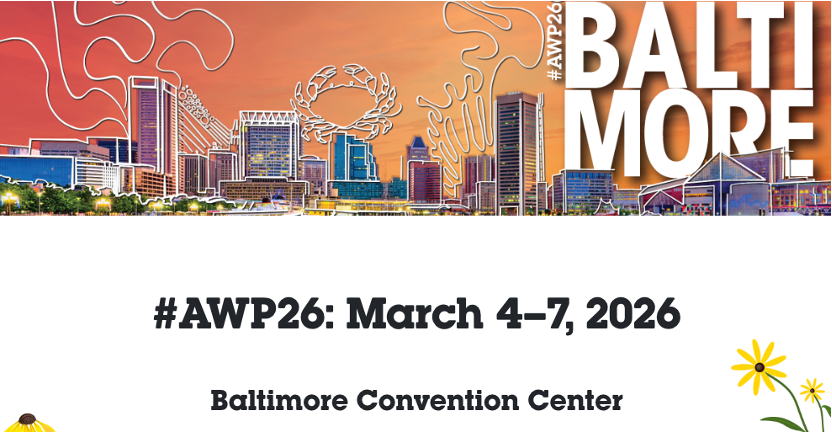
Banner for AWP26, March 4-7, 2026 picture of a styled city skyline with the word Baltimore over it in white text.

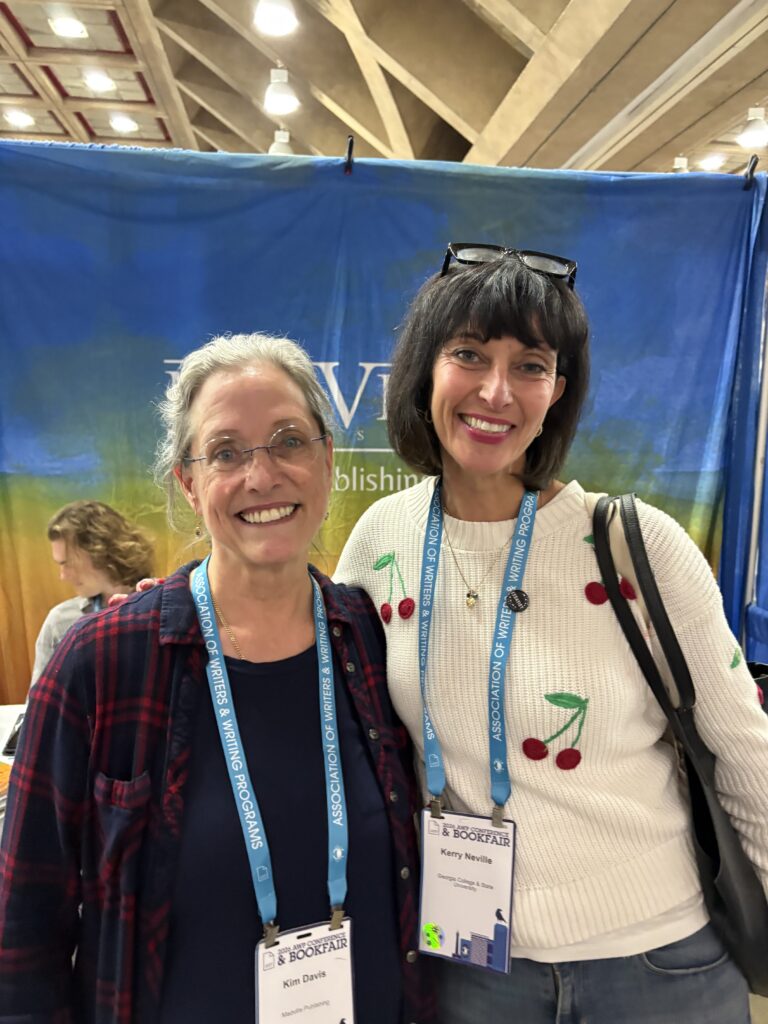
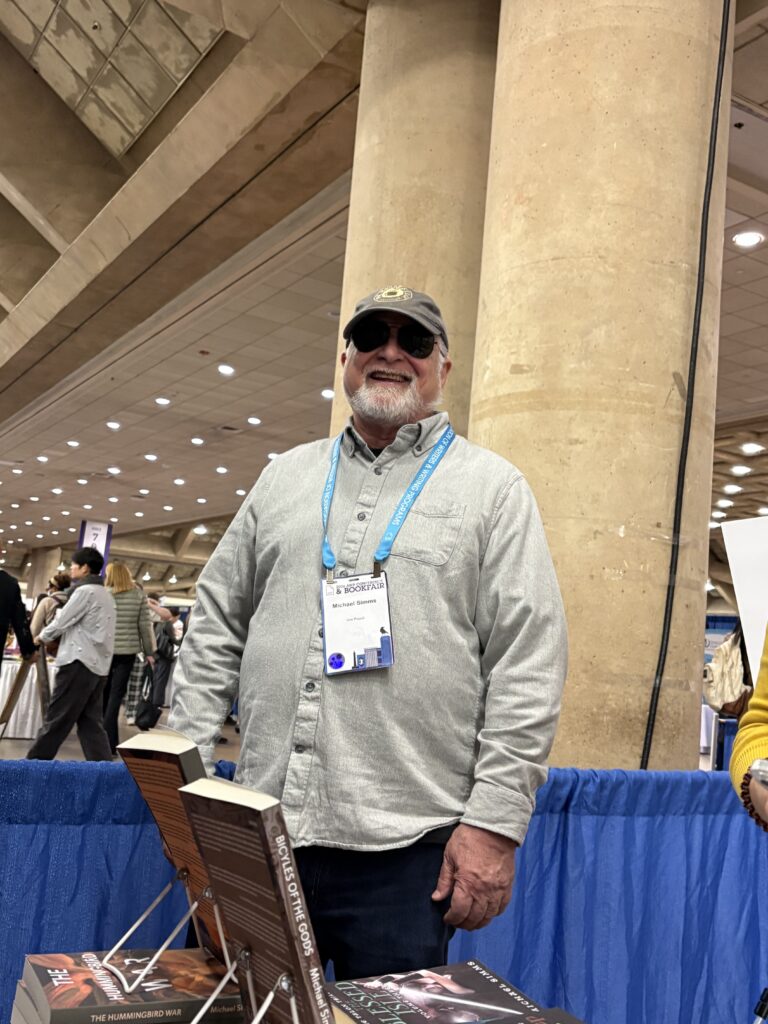
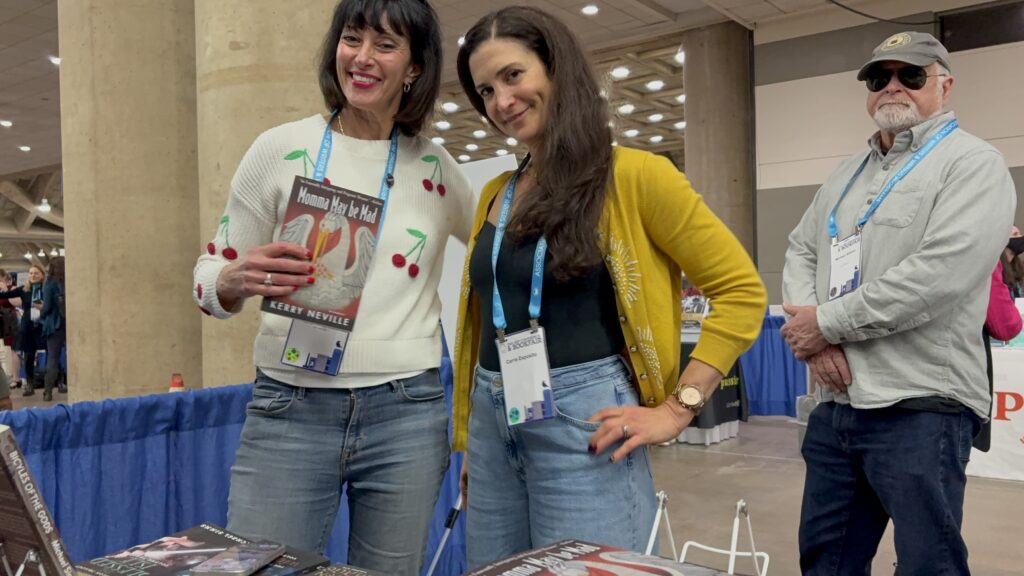
We’ve just returned from AWP, North America’s largest Conference & Bookfair for writers and writing programs. It took place in Baltimore March 4-7, 2026. We saw a lot of friends. There was comedy at our little corner of the book fair, as usual. It seems there was a rogue electric mobility device that was assigned to two of our friends on different days. Of course, both friends tried to stop by to see us. Tried is the operative word here because the evil blue cart had other ideas! I won’t mention names, but one friend plowed through on Friday, and another did the same on Saturday!!! It was good for a laugh, but I did mention it to the security staff, since we are pretty sure the same cart was involved in both accidents.

A feeling of solidarity

The feel of this conference was one of solidarity. Everyone seemed to recognize that our role has become more important over recent months. The books we write and publish and the younger writers and editors we teach have greater value than ever in this time of book banning and media consolidation. We seem all to be holding the weight of responsibility to maintain literacy itself.

The electricity of enthusiasm

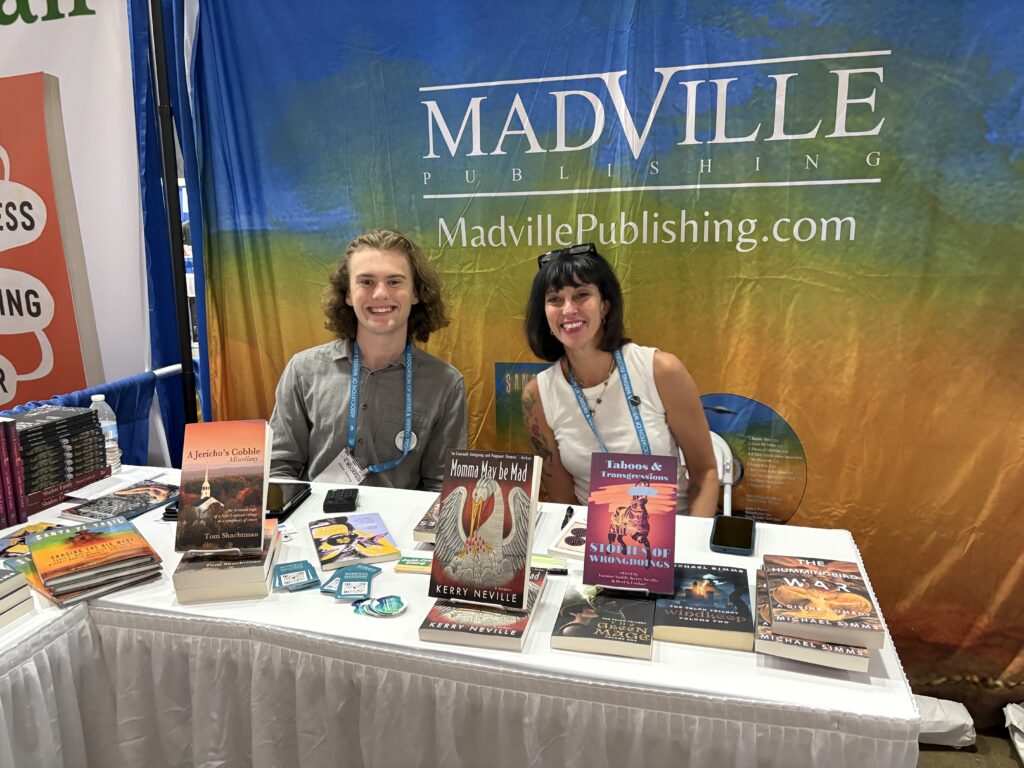
We say this every year, but the really good part… The best part of the whole event is seeing our friends. And making new ones! We got a lot of compliments on our books. We sold a lot of books. We took too many anyway, and didn’t have enough of the ones everyone wanted… (Twenty Years of Poem of the Week . com, Momma May Be Mad, The Hummingbird War, and Signed, Sealed, Delivered).

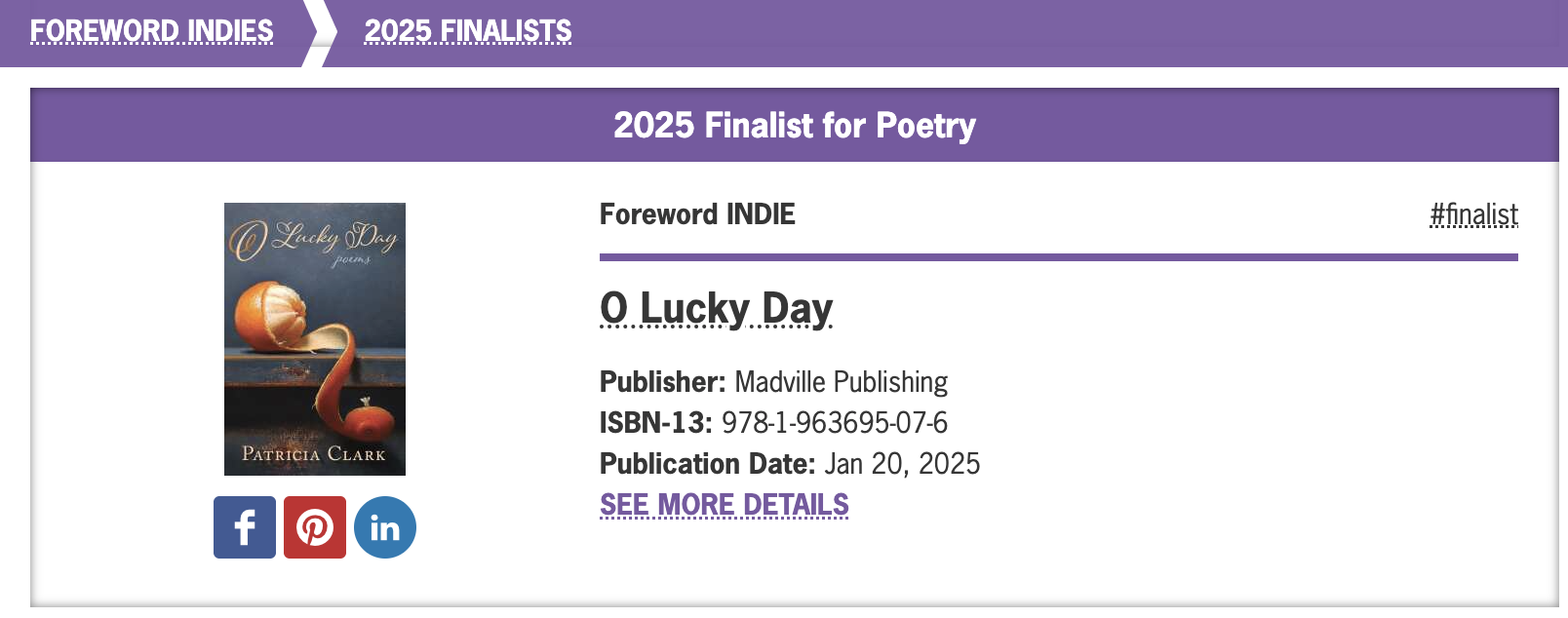
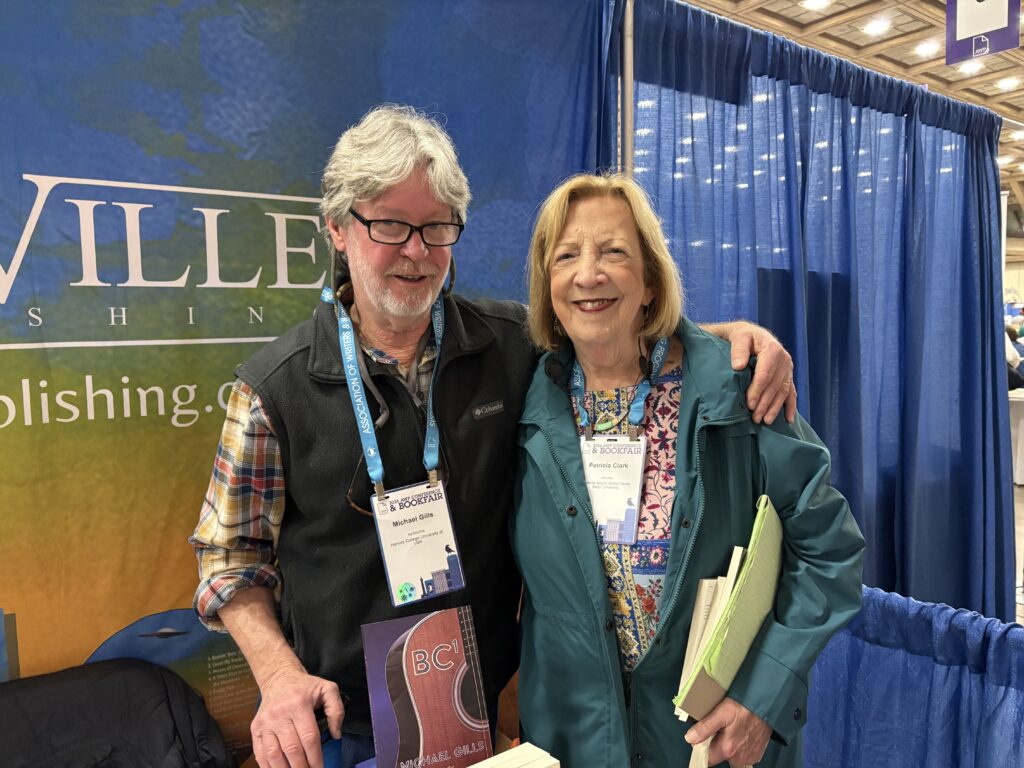
There was a little surprise for Patricia Clark while we were there. She got word that her O Lucky Day has been named a Forward Indies finalist. So we got to share that news with people stopping by the booth.

Screen capture from The Foreword Indies Awards page showing that Patricia Clark's O Lucky Day is a finalist in the poetry category