
All the info we have about our open submissions periods is on this page. We do NOT ACCEPT UNSOLICITED WORK. We’d love to do more, but our staff and our funds are limited. Subscribe to our newsletter (bottom of the page), and we’ll let you know when we open for submissions of any sort.
Please bear with us! We are working on a new Novel Prize! We hope to open for submissions November 1 and run through April 30, 2027
The 2026 Arthur Smith Poetry Prize is currently in the judging phase. Closed for Submissions

We remember Art Smith as a good friend to many as Jesse Graves, our first judge for the competition, shares in this essay for Chapter 16. (Click the image at right to read the full essay).
Deadlines and Prizes
- Accepting Submissions May 1 through September 1, 2026.
- Winners will be announced in January 2027.
- Winning poet receives: a $1,000 advance; a standard royalty contract; and 10 copies of the published book.
- Finalists will also be considered for future publication.
Competition Guidelines
- Simultaneous Submissions: Simultaneous submissions are acceptable. Please notify Madville Publishing immediately if your manuscript is accepted elsewhere.
- Eligibility: We will be happy to receive work by any poet writing in English. Poems published in print or online periodicals, anthologies, or chapbooks may be included, but the manuscript itself must be unpublished. Original work only; translations are ineligible.
- Format: Minimum of 48 pages. There is no maximum length, but we expect manuscripts not to be much more than 90 pages. Pages should be numbered with no more than one poem per page. Please include a title page with title only, a table of contents, and an acknowledgments page.
- Multiple Submissions: Submission of more than one manuscript is acceptable, but each manuscript must be submitted separately and include a separate entry fee.
- International Submissions: We accept international submissions.
- Revisions: The winner will have the opportunity to revise the manuscript before publication. No revisions will be considered during the reading period.
- SUBMISSIONS SHOULD BE BLIND. PLEASE DO NOT INCLUDE AUTHOR NAME ANYWHERE ON THE MANUSCRIPT.
- Entry Fee: $25
- Deadline: September 1, 2026
- Winner will be announced January 2027.

Our judge for 2026 is
Kari Gunter-Seymour!
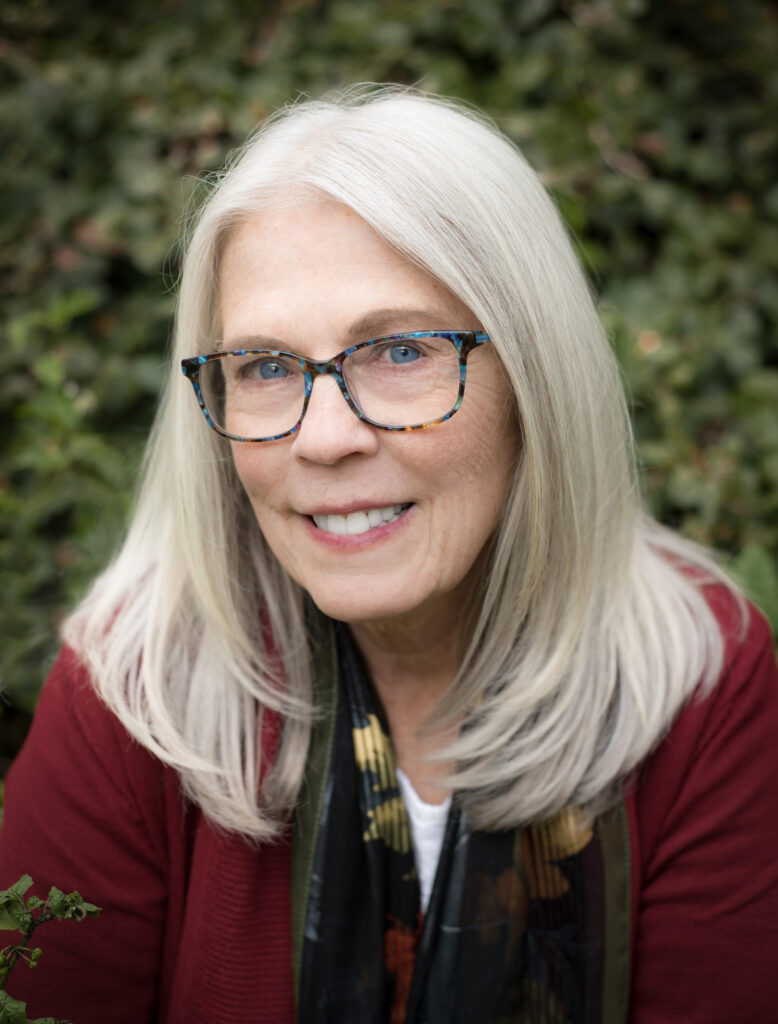
Kari Gunter-Seymour is the immediate past Poet Laureate of Ohio and an Academy of American Poets Laureate Fellowship recipient. Her poetry collections include Dirt Songs (EastOver Press, 2024) winner of the 2025 Bronze IPPY Award for Poetry, 2025 NYC Big Book Award, 2025 Feathered Quill Award, 2025 National Federation of Press Women Award, 2024 POTY Author of the Year Award and STORYTRADE Award; Alone in the House of My Heart (Ohio University Swallow Press, 2022), winner of the 2024 Legacy Award, the 2023 Best Book Award, and finalist for the 2023 National Indie Excellence Award; and A Place So Deep Inside America It Can’t Be Seen(Sheila Na Gig Editions, 2020), winner of the 2020 Ohio Poet of the Year Award. A ninth generation Appalachian, she is the executive director of the Women of Appalachia Project and editor of its anthology series, Women Speak. Gunter-Seymour holds writing workshops for incarcerated adults and women in recovery, is a retired instructor in the E.W. Scripps School of Journalism at Ohio University and the founder, curator, and host of “Spoken & Heard,” a seasonal performance series featuring poets, writers, and musicians from across the country. She is the editor of I Thought I Heard A Cardinal Sing: Ohio’s Appalachian Voices, funded through the Academy of American Poets and the Andrew W. Mellon Foundation. She was selected to serve as a 2022 Dodge Poetry Festival Poet and is a Pillars of Prosperity Fellow for the Foundation for Appalachian Ohio. Her work has been featured in World Literature Today, American Book Review, Poem-a-Day, Katie Curic’s Wake Up Call and The New York Times.
Preliminary Readers:

Jessica D. Thompson is the author of the full-length poetry collection Daybreak and Deep, (Kelsay Books 2022), co-author of the children’s book When Animals Miss the Sun (Brick Street Poetry 2024), and The Mood Ring Diaries (Kelsay Books 2025). A native of Kentucky, she divides her time between two places: a stone house on the edge of a classified forest in southern Indiana and a 1918 log cabin in central Indiana. She is a retired Human Resource professional and for many years she served as a volunteer in a crisis office and as a hospital and legal advocate for a battered women’s shelter. Her newest poetry collection, Birds of Thunder is forthcoming from Accents Publishing in 2026.

Summer Awad is a multi-genre writer of Palestinian descent from Knoxville, Tennessee. Her poetry has been published in Mizna, Fikra Magazine, Adi Magazine, Beloit Poetry Journal, and others. Her nonfiction has appeared in J Journal and Chapter 16 and has earned her a de Groot Foundation LANDO Grant for migration, immigration, and refugee writing. She was awarded First Prize in the 2026 Arab American Educational Foundation Short Story Contest. She holds an MFA in Creative Writing and Environment from Iowa State University, and she currently works with youth survivors of trafficking. You can find her work at summerawad.com.

Jake Lawson is an adjunct English instructor at East Tennessee State University. He is a current member of the Johnson City Poets Collective, and his work has appeared in Town Creek Poetry, the Tennessee Voices anthology, Appalachian Places, Pine Mountain Sand & Gravel, and The Appalachian Journal, among other publications.
Arthur Smith Poetry Prize for 2025 The results are in! See who won HERE.
Other Submissions News and Updates
Submitting Manuscript Queries
All manuscripts published by Madville Publishing undergo a rigorous vetting process before they are accepted for publication. We are turning away queries at present. We have more than we can read. We do not accept any work generated using Artificial Intelligence.
WE ARE NOT ACCEPTING QUERIES AT PRESENT.
Formatting
Writers should ensure that their manuscript submitted for editing adheres to the following guidelines.
Prose should be submitted in 12 pt., Times New Roman, double spaced, one inch margins and pages numbered. If it is not a contest submission, make sure your name and contact information is in the header and on the title page.
Poetry should be 12 pt., Times New Roman, single spaced, one inch margins, one poem per page, and pages numbered. Full manuscripts should include credits for previously published poems and a table of contents.
Style Manual: Madville Publishing generally follows the Chicago Manual of Style and the Merriam-Webster Dictionary and defers to American spellings (e.g., gray, not grey). We use Oxford commas, em dashes with no space on either side, and ellipses with the three dots run together as in APA style (which assures that the ellipsis won’t break at the end of a line). Also, the standard is one space after end punctuation.
Titles of books, films, albums, plays, art exhibits, television shows, podcast series, radio programs, periodicals, and newspapers should be italicized. Place quotation marks around the titles of short stories, poems, songs, and individual TV/radio/podcast episodes.
Numbers can be tricky for poems, and we aim for readability and consistency.
Regarding long lines and line breaks, in the first proof after layout the editor and the poet may decide whether to rewrite the line or break it differently. There should be no further changes in line breaks after the first proof.